
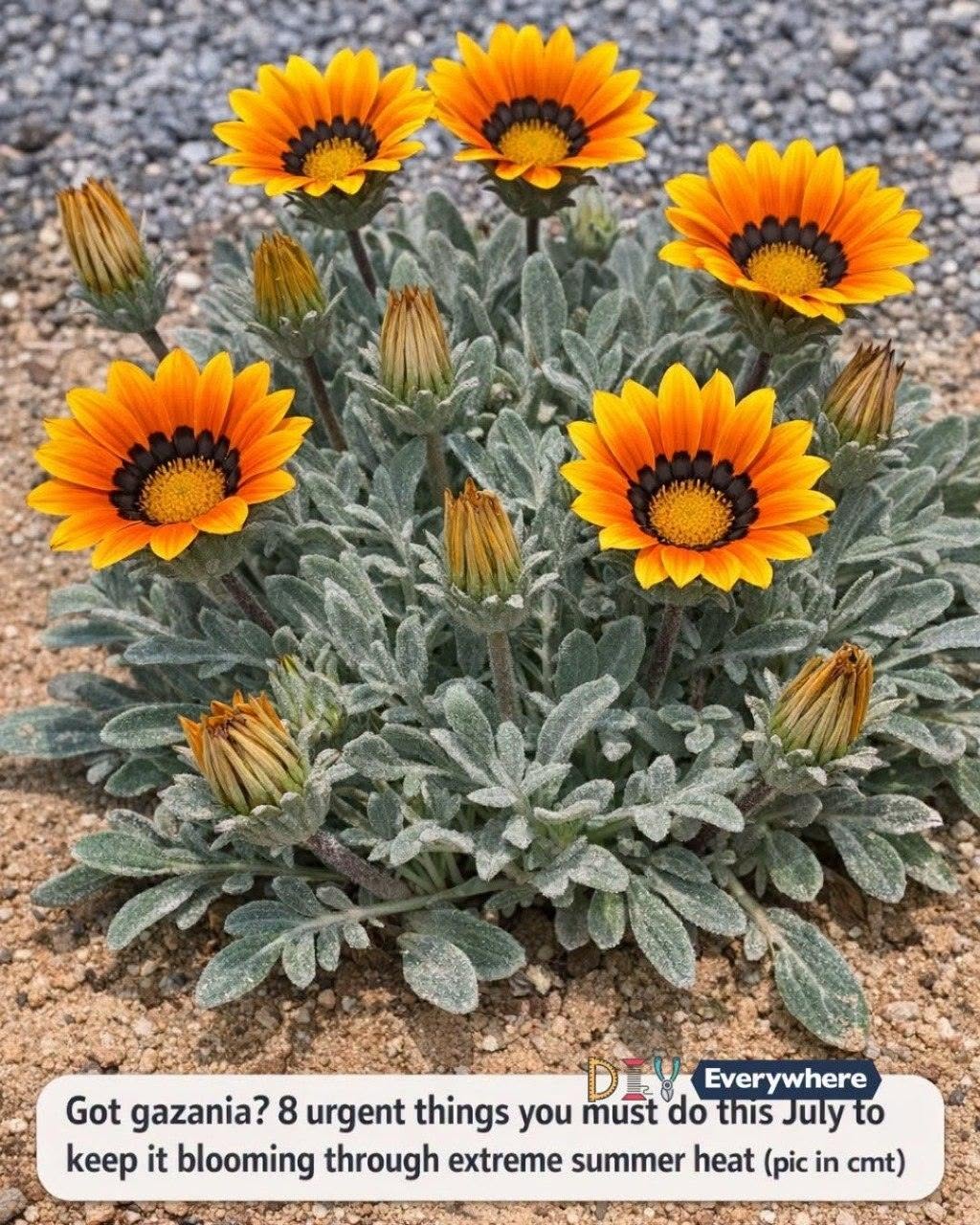
8. Check pots for crowded roots and compacted soil
By July, a healthy gazania in a small nursery pot may be rootbound, and when that happens, water can run right through without soaking in properly.
If you water and the pot dries out again in just a few hours, or the plant seems stressed despite regular care, slide it gently out of the container and inspect the roots.
If roots are circling densely around the outside, move up just 1 to 2 inches in pot size. For example, shift from an 8-inch pot to a 10-inch pot, not straight into something oversized.
Use a fast-draining potting mix, ideally one with perlite or coarse sand blended in. Heavy garden soil in a pot is a recipe for trouble in hot weather.
9. Improve drainage immediately if plants are sitting in wet soil
People think heat damage always comes from drought, but in July I’ve lost more summer flowers to poor drainage after heavy storms than I care to admit.
Gazanias need sharp drainage. If the planting area stays muddy for more than 24 hours after rain, or if water puddles around the crown, take action now.
You can gently lift and replant them on a slight mound 2 to 3 inches higher than the surrounding soil, or amend the bed with coarse compost and grit if the area is chronically heavy.
For containers, never let saucers stay full of water. Empty them after watering or after a storm. Warm, waterlogged roots plus summer heat can collapse a healthy-looking plant surprisingly fast.
10. Watch for spider mites and aphids during dry heat
Hot, dry spells can bring spider mites, and they’re easy to miss at first. Look for tiny pale speckles on leaves, a dull or dusty look, and fine webbing tucked underneath foliage.
Aphids may cluster on softer new growth and flower stems. I check plants every few days when the weather turns harsh, especially container plants grouped close together.
If I catch pests early, a strong spray of water in the morning is often enough to knock aphids off. For spider mites, spraying the undersides of leaves helps, but you may need insecticidal soap if numbers build.
Always follow label directions, and never spray during the hottest part of the day. I wait until early morning or evening, and I test one section first if the plant is already stressed.
11. Remove scorched or diseased foliage before it spreads trouble
Leaves that are brown, crispy, spotted, or collapsing aren’t helping the plant anymore. In fact, they can block airflow and make the plant look more tired than it really is.
I go through with clean scissors and remove damaged leaves back to healthy tissue. This tidies the plant and helps me see what’s really going on at the crown and base.
If you notice mushy stems, gray mold, or a sour smell near the soil line, that’s more serious than simple heat scorch. Remove affected parts right away and reassess watering and drainage.
I always clean my pruners with rubbing alcohol or a disinfecting wipe between sick plants so I’m not carrying problems from one container to another.
12. Don’t panic if flowers close at certain times of day
This one reassures a lot of gardeners. Gazania blooms naturally open and close in response to light, and on very cloudy days or in the evening, they may stay partly shut.
In intense heat, some flowers also shorten their open time as a stress response. That doesn’t always mean the plant is failing.
What matters more is whether you still see healthy buds forming, firm foliage, and steady new growth. If buds are developing and the leaves look good in the morning, you’re probably in decent shape.
I remind myself not to judge these plants at 4 p.m. after a scorching day. Check them early, when they’ve had a chance to recover overnight.
13. Keep bloom production going with a quick weekly July routine
When life gets busy, a simple routine helps. Mine is this: on Sunday morning, I deadhead, trim off damaged leaves, check soil moisture, and inspect for mites or aphids.
Midweek, usually Wednesday or Thursday, I recheck containers and water deeply if needed. Every 2 to 3 weeks, I feed container plants lightly. If a heat wave is coming, I move vulnerable pots before the worst afternoon sun hits.
That little rhythm has saved a lot of flowers for me over the years, and it keeps the work manageable. Gazanias truly are generous plants when their basic needs are met.
With a few urgent July adjustments, you can keep those orange, yellow, pink, and striped blooms coming long after other flowers start giving up in the heat.
