
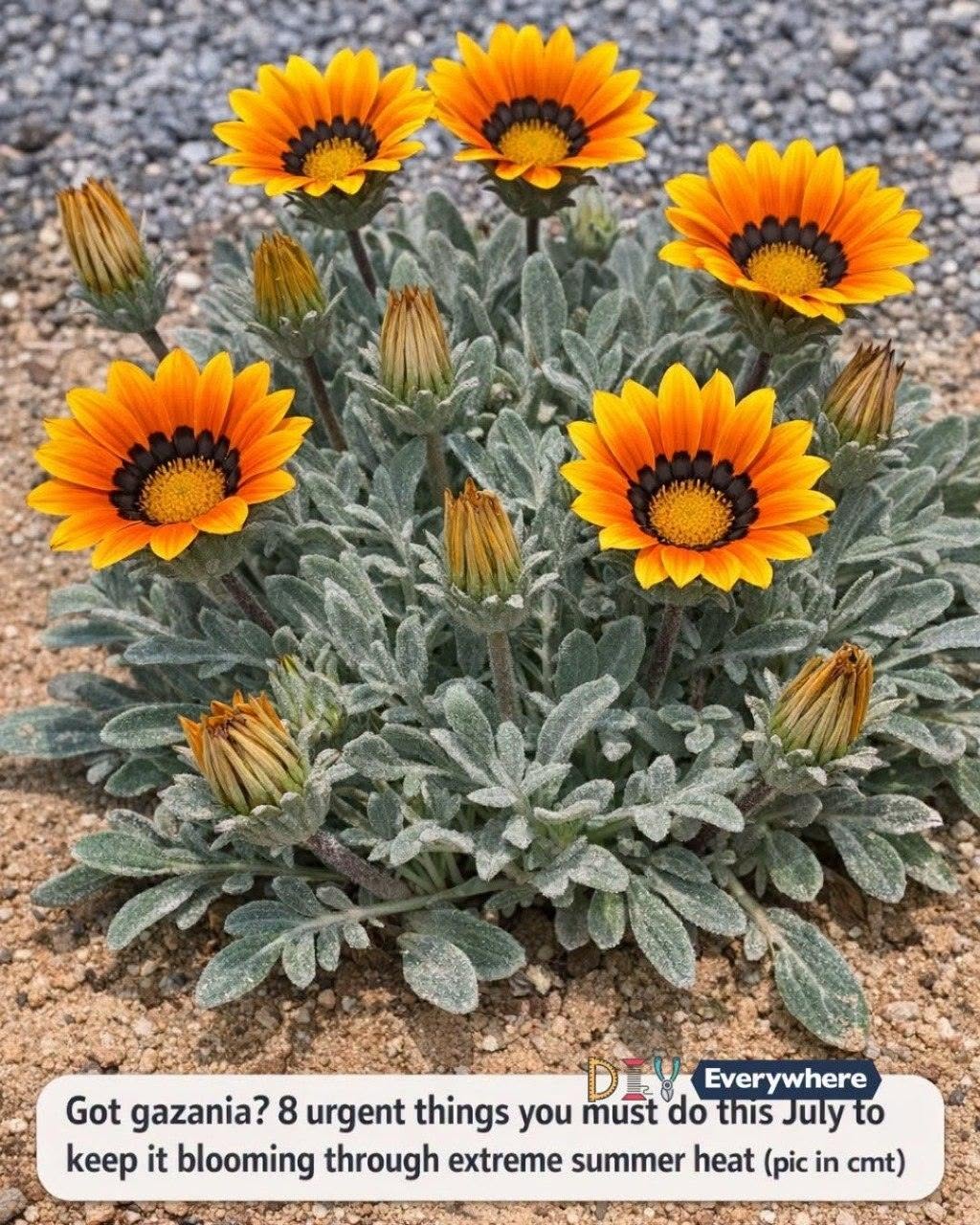
By July, my gazania pots and border edges are usually either the stars of the yard or they’re sulking from heat that feels downright mean.
Here in the Midwest, we can go from a pleasant morning to pavement-radiating, 95-degree afternoons in a hurry, and even heat-loving flowers like gazanias need a little help to keep pushing out those bright daisy-like blooms.
If your plants have slowed down, started looking leggy, or are only opening for a short window each day, this is the month to step in.
The good news is that gazanias are tougher than they look, and with a few timely jobs in July, you can often keep them flowering right through the roughest stretch of summer.
I’m going to walk you through the most important things I do this month, from watering and trimming to feeding and checking for heat stress, plus a few practical tricks I use for containers, beds, and even those fussy spots where the sun bakes the soil dry by lunchtime.
1. Water deeply, not constantly
In extreme summer heat, the biggest mistake I see is giving gazanias a tiny sprinkle every day. That wets only the top 1 to 2 inches of soil, and the roots stay shallow.
Instead, water deeply so moisture reaches 6 to 8 inches down. For in-ground gazanias, that usually means about 1 inch of water per week in normal summer weather, but in a July heat wave with temperatures above 90°F for several days, they may need closer to 1 1/2 inches weekly.
For containers, check daily because pots can dry out fast, especially terra-cotta. I stick my finger into the soil about 2 inches. If it feels dry there, I water until it runs out the drainage holes.
Early morning, between 6 a.m. and 9 a.m., is the best time. That gives the plants moisture before afternoon heat and helps reduce stress without leaving foliage damp overnight.
2. Stop watering on a rigid schedule and start watching the plant
July weather can be tricky. One week you get 2 inches of rain, and the next you get hot wind that dries everything out in a day.
Gazanias don’t want soggy roots, so instead of watering every Tuesday and Friday no matter what, look for cues. Leaves that seem limp in the morning, slowed flowering, and soil pulling away from the edges of a pot are all signs the plant is getting too dry.
At the same time, yellowing lower leaves combined with constantly wet soil can mean the opposite problem. If the crown sits wet in heavy soil, root rot can set in.
In my own beds, I’d rather water thoroughly and then let the top inch dry slightly than keep the ground damp all the time. It’s a better balance for bloom production.
3. Deadhead spent blooms every few days
If you want more flowers, this one really matters in July. Each faded bloom left on the plant tells it to start shifting energy toward seed production instead of making fresh buds.
I try to deadhead every 3 to 4 days during peak bloom. It only takes 5 minutes with a small basket or kitchen bowl in hand.
Pinch or snip the flower stem back to the next set of leaves or to the base of the stem if it’s fully spent.
Don’t just pull petals off and leave the seed head behind. For a larger planting, I use little garden scissors and move row by row.
It’s one of those simple chores that makes a flower bed look tidier immediately, and the plants usually respond with a steadier flush of blooms.
4. Shear leggy plants lightly to trigger a fresh round
By mid-to-late July, some gazanias start looking stretched, especially if they had a strong first flush in June. When mine get scraggly, I give them a light haircut instead of waiting for them to recover on their own.
Trim back about one-third of the plant, focusing on long flowerless stems and tired growth. Don’t scalp it down to the crown in brutal heat.
After trimming, water deeply and keep an eye on the next 5 to 7 days. If temperatures are staying above 95°F, I wait until a slightly milder stretch or do the job in the evening so the plant isn’t shocked.
Usually, a light shearing paired with proper watering perks them up and encourages new buds within 10 to 14 days.
5. Feed lightly with a bloom-supporting fertilizer
Gazanias are not heavy feeders, but by July, plants in containers especially may have used up a lot of what was in the potting mix.
I like a diluted liquid fertilizer every 2 to 3 weeks, something close to a 10-15-10 or 5-10-5 ratio, mixed at half strength. Too much nitrogen gives you extra leaves and fewer flowers, which is not what we want right now.
For plants in the ground, one light application is usually enough if the soil is reasonably decent. If you prefer a slow-release granular fertilizer, follow package rates carefully and water it in well.
I always avoid feeding a bone-dry plant in the heat of the day. Water first, let the plant recover, then feed later in the morning or on the next day.
6. Mulch the root zone, but keep the crown clear
When the sun is beating down and the soil surface is baking, a thin layer of mulch can make a big difference. Around garden-bed gazanias, I use about 1 inch of fine mulch, shredded bark, pine fines, or even clean straw in a pinch. This helps keep soil temperatures steadier and slows evaporation.
The key is not piling mulch up against the center of the plant. Leave a 1-inch gap around the crown so air can circulate.
If mulch is packed too tightly there, heat plus moisture can create the perfect setup for rot. In my yard, mulching is especially helpful in those spots near sidewalks or driveways where reflected heat makes everything extra harsh.
7. Give container plants afternoon protection if the heat turns dangerous
Gazanias love sun, but there’s a difference between bright summer sun and punishing reflected heat off a patio at 3 p.m. If your potted plants are sitting on concrete, brick, or a south-facing deck and temperatures climb into the upper 90s or above 100°F, move them where they still get at least 6 hours of direct sun but have a little relief from the worst late-day blast.
I’ve had great luck shifting pots to a spot that gets full morning sun and light dappled shade after about 2 p.m. During severe heat advisories, that can be the difference between steady blooming and flowers that stay shut.
If moving the pot isn’t practical, even raising it on pot feet or a plant stand can help keep the root ball from overheating against hot surfaces.
