
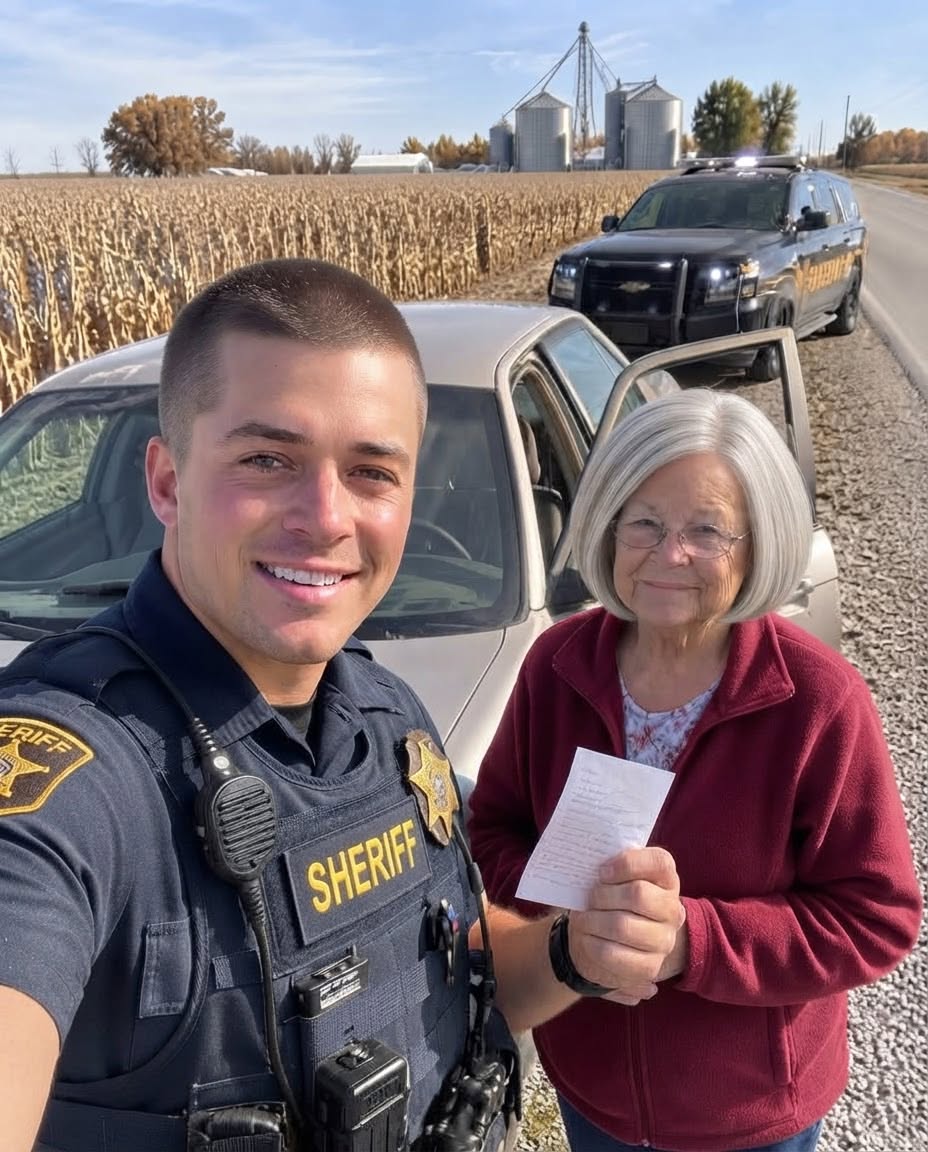
He explained that working in the dispatch center had changed the way he thought about his job.
He’d listened to frightened parents.
Older people struggling to explain emergencies.
Drivers who were confused or overwhelmed.
And people who simply needed someone to slow down and listen.
“I thought being a good deputy meant always taking control,” he admitted.
Mom smiled.
“Sometimes the best thing you can do is listen first.”
Kyle nodded.
“I won’t forget that.”
Eventually, Mom’s permanent driver’s license arrived in the mail.
She put it in her wallet without making a big deal of it.
She never asked anyone to tell the story publicly.
Never demanded recognition.
Never used the incident to remind people of her years of service.
She simply returned to her familiar routines.
Church on Sundays.
Coffee in the morning.
Conversations with old friends.
And occasionally listening to the emergency scanner while sitting in her favorite chair.
But something changed for me.
I began calling her every Sunday evening.
Not because she needed help.
Not because something had gone wrong.
Simply because I wanted to hear her voice.
She always answered almost immediately.
“Hello, sweetheart.”
And every time, I pictured her sitting at a dispatch desk years earlier, answering calls from strangers who needed someone to care.
For thirty-four years, my mother had been there for people during some of the most difficult moments of their lives.
She’d listened when they were frightened.
Reassured them when they felt helpless.
And reminded them that they weren’t alone.
It took an afternoon on County Road 6 for me to appreciate how many people remembered her kindness.
But the most important lesson wasn’t about the deputy or his punishment.
It was about my mother.
After spending a lifetime answering everyone else’s calls for help, Shirley Hagen deserved to know that someone was calling simply because they loved her.
