
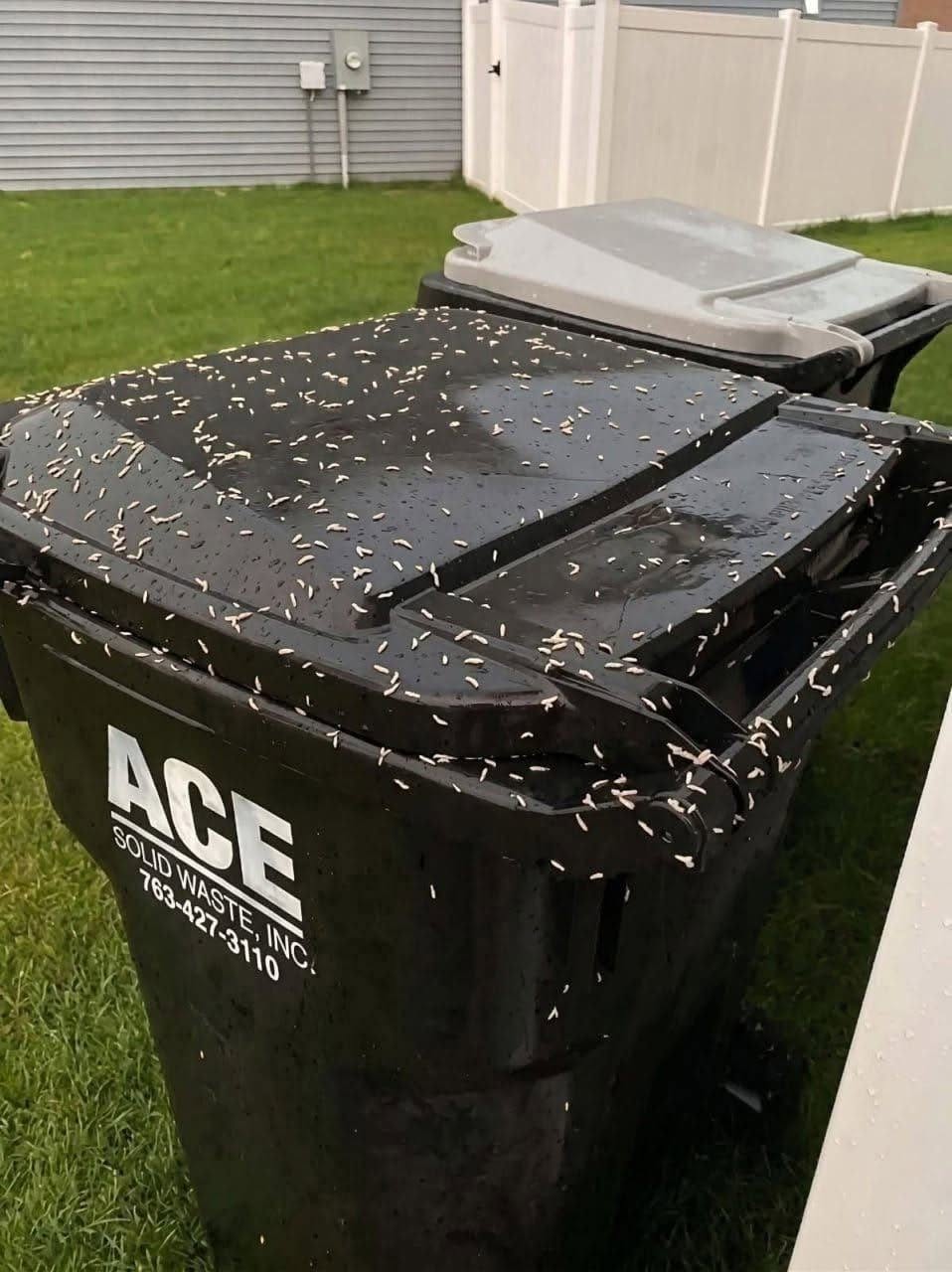
Opening a trash bin and discovering dozens of small white larvae moving around inside can be an unpleasant surprise. Maggots can appear quickly, particularly during warm weather, and a bin that looked perfectly normal a day or two earlier may suddenly seem completely infested.
The good news is that maggots in a garbage can are usually a temporary waste-management problem rather than evidence that something is seriously wrong with your home.
They appear because flies have found suitable material on which to lay their eggs. Remove the food source, clean the container thoroughly, and make it difficult for flies to return, and the problem can usually be brought under control.
Understanding exactly why maggots appear is also important because some popular household tricks are far less useful than simple sanitation. The most effective strategy is not covering the bin with strongly scented ingredients.
It is removing decaying organic material, controlling moisture, keeping garbage sealed, and preventing adult flies from reaching the waste.
What Exactly Are Maggots?
Maggots are the larval stage of certain flies. Several kinds of flies can reproduce around household garbage, including houseflies and blowflies.
Adult flies are attracted to decomposing organic material because it provides food for
Continued on the next page
their developing larvae. Meat scraps, fish, spoiled food, animal waste, greasy food packaging, and leaking garbage bags can all create suitable conditions.
A fly does not need much time inside an open garbage container. If it reaches exposed food waste and lays eggs, those eggs may hatch relatively quickly when environmental conditions are favorable.
That is why an infestation can seem to appear overnight.
Why Trash Bins Are So Attractive to Flies
A garbage container can provide nearly everything developing fly larvae need:
Food from decomposing organic waste
Moisture from food liquids and leaking bags
Warmth, especially during summer
Protection from direct sunlight and predators
Plenty of organic material for larvae to feed on
The smell produced by decomposing food can also attract adult flies from the surrounding area.
Warm weather accelerates decomposition and can shorten the development cycle of many insects. This explains why households that rarely encounter maggots during winter may suddenly experience them during hot summer weeks.
Where Do the Maggots Actually Come From?
Maggots do not spontaneously develop from garbage. Adult flies must first reach suitable organic material and lay eggs.
The eggs are extremely small and can easily go unnoticed. They may be deposited directly
according to your local collection rules.
Once the organic material has been removed, you can concentrate on the bin itself.
Step 1: Empty the Trash Bin Completely
Do not simply treat the visible larvae while leaving old garbage underneath them.
Remove all bags, loose food, paper, packaging, and debris from the container. Check beneath the rim and around hinges because small pieces of food can become trapped in these areas.
If possible, move the empty bin to an outdoor location where cleaning water can be safely disposed of without contaminating food-preparation areas.
Step 2: Remove Remaining Larvae
Visible larvae can be removed mechanically during cleaning. Hot water can also help wash larvae and organic residue away.
Very hot or boiling water is sometimes recommended for killing maggots because larvae cannot tolerate sufficiently high temperatures. However, boiling water should be handled cautiously.
Some plastic garbage containers can warp or become damaged when exposed to extremely hot water, and pouring boiling water creates a burn and splash hazard.
For many household bins, thorough washing with appropriately hot water and detergent is a safer practical approach.
Step 3: Scrub the Entire Container
Cleaning is one of the most important parts of eliminating the
infestation.
Use water and household dish detergent or another cleaner appropriate for the material of your garbage container.
Pay particular attention to:
The bottom of the bin
Inside corners
The underside of the lid
Handles
Hinges
Wheel areas
The upper rim
Grooves where liquids or food particles collect
The goal is not simply to remove the larvae. You also want to eliminate the grease, food residue, and decomposing liquids that attracted adult flies in the first place.
A long-handled brush can make this job much easier.
The visible maggots are only part of the problem—the hidden food residue around the lid and bottom of the bin is often what keeps flies coming back.
Step 4: Rinse the Bin Thoroughly
After scrubbing, rinse away loosened debris and cleaning solution.
Inspect the container again. If greasy residue remains, repeat the washing process rather than trying to hide the odor with fragrance.
Odor is frequently a sign that organic material is still present somewhere in the container.
Step 5: Let the Bin Dry
Whenever practical, allow the bin to dry before inserting another garbage bag.
Flies and their larvae thrive around moist decomposing material, so keeping the container reasonably dry makes it less
inviting.
Turn the bin upside down in an appropriate location or leave the lid open while it dries, provided this does not allow rain, animals, or additional flies to enter.
Does Vinegar Kill Maggots?
Vinegar is commonly suggested as a natural trash-bin cleaner. Diluted white vinegar may help loosen some residue and reduce certain odors, but it should not be treated as a magical solution for an infestation.
Physical removal, detergent cleaning, rinsing, drying, and controlling access to food waste remain more important.
There is also little benefit to mixing vinegar with baking soda when your objective is cleaning. The dramatic fizz looks powerful, but vinegar is acidic while baking soda is alkaline, so combining them causes them to react with and partially neutralize each other.
Either ingredient may have particular household cleaning uses on its own, but the bubbles themselves do not make the mixture a superior disinfectant.
Never Mix Vinegar With Chlorine Bleach
This is an important household safety rule.
Do not combine vinegar or other acidic cleaners with chlorine bleach. The combination can release dangerous chlorine-containing fumes.
Bleach should also never be mixed with ammonia or random household cleaners.
If you choose to use a disinfecting product
after cleaning your bin, follow its label directions carefully and use only compatible products.
Do You Need Bleach?
Not necessarily.
For routine garbage-bin cleaning, detergent, water, thorough scrubbing, and drying may be sufficient. If you decide that disinfection is appropriate, use a product intended for the surface and follow the manufacturer’s instructions for dilution, contact time, ventilation, and rinsing.
Using excessive amounts of disinfectant does not replace physical cleaning because disinfectants work poorly when surfaces remain covered with food residue and grime.
What About Salt?
Salt is another frequently recommended home remedy. Concentrated salt can draw moisture from some small organisms, but sprinkling salt into a dirty garbage bin is not a substitute for removing the contaminated waste and washing the container.
If the bin is clean, dry, and properly managed, additional salt is usually unnecessary.
Be Careful With Garden Lime
Some online tips recommend spreading garden lime inside garbage containers. This should not be done casually.
Products sold as lime can vary considerably, and some forms can irritate or burn the skin and eyes or create irritating dust.
For an ordinary household trash container, removing food residue, washing the bin, keeping it dry, and sealing garbage properly are simpler
and safer prevention measures.
What About Diatomaceous Earth?
Diatomaceous earth is sometimes promoted as a way of controlling insects because certain products can damage the protective outer layer of insects and contribute to dehydration.
However, powders can become airborne and should not be inhaled. Products also differ in formulation and intended use.
If someone chooses an insect-control product, it should be specifically labeled for that use and used according to the manufacturer’s directions. There is usually no need to coat a household garbage bin with powder when ordinary sanitation and fly exclusion solve the underlying problem.
Continued on the next page
