
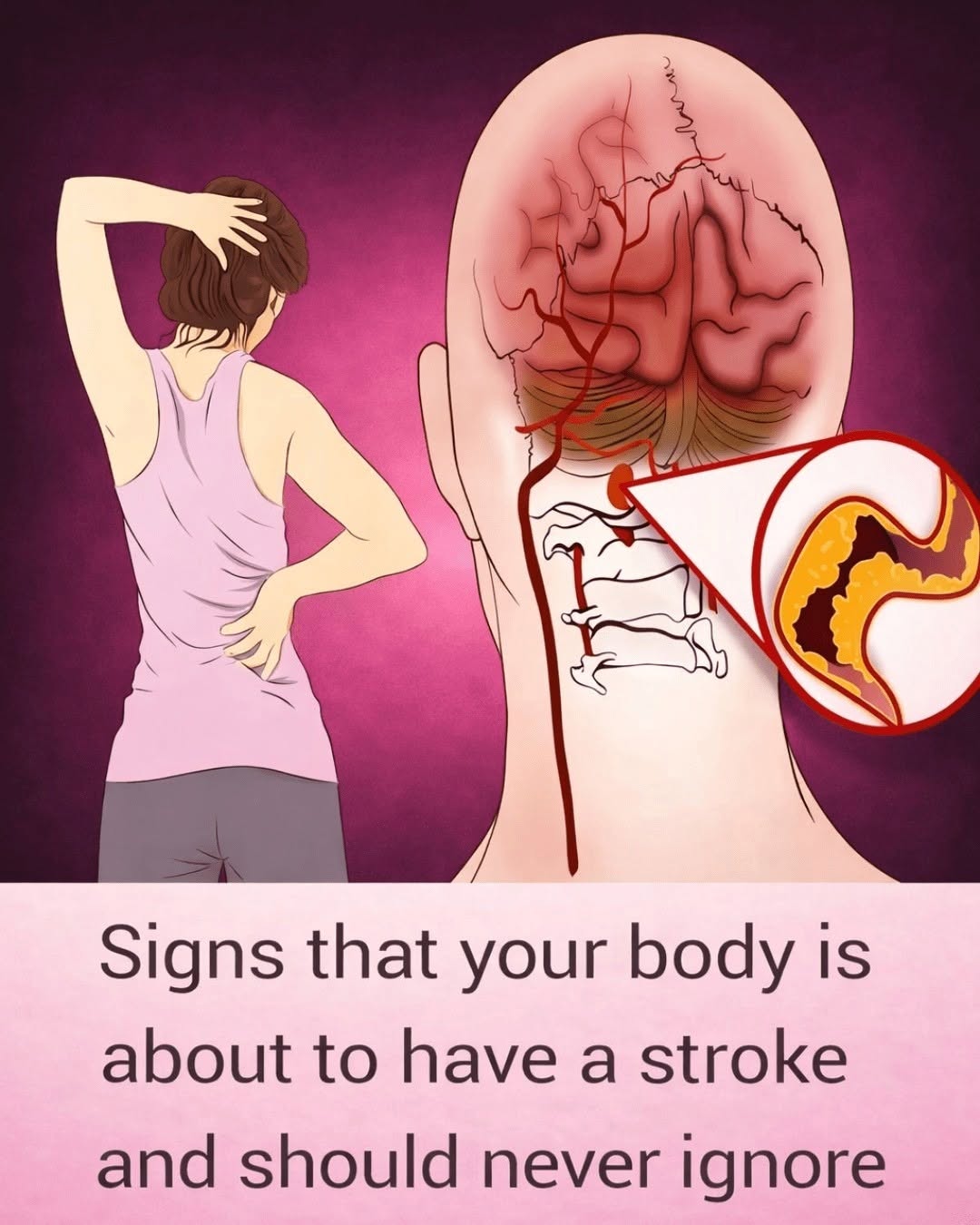
# 10 Early Warning Signs of a Stroke Everyone Should Know to Take Prompt Action
A stroke happens when blood flow to part of the brain is blocked or when a blood vessel in the brain ruptures. Because brain tissue can be damaged quickly, recognizing the warning signs and getting emergency help fast can make a major difference.
Stroke symptoms often appear **suddenly**. They may be mild or severe, and in some cases they can disappear after a few minutes. Even if symptoms go away, they may represent a transient ischemic
attack, or TIA, which still requires urgent medical evaluation.
Here are 10 warning signs everyone should know.
## 1. Sudden Weakness or Numbness on One Side
One of the most common stroke warning signs is sudden weakness, numbness, or paralysis affecting one side of the body.
This may involve:
* the face
* one arm
* one leg
* or several areas on the same side
A person may suddenly struggle to lift one arm or feel that one side of the body is unusually heavy.
## 2. Facial Drooping
Ask the person to smile.
If
one side of the face droops, appears uneven, or feels numb, this can be a warning sign of stroke.
Facial weakness may be subtle at first, so comparing both sides of the face can help reveal the difference.
## 3. Difficulty Speaking
Stroke can affect the areas of the brain involved in speech.
A person may suddenly:
* slur words
* speak unusually slowly
* use incorrect words
* be unable to form a sentence
* have trouble repeating a simple phrase
Any sudden change in speech should be treated seriously.
## 4. Trouble Understanding Speech
Some
people can speak but suddenly have difficulty understanding what others are saying.
They may appear confused, respond incorrectly, or struggle to follow simple instructions.
Sudden problems with comprehension can be a sign that the brain is not receiving normal blood flow.
## 5. Sudden Vision Changes
A stroke can affect vision in one or both eyes.
Possible symptoms include:
* blurred vision
* double vision
* partial loss of sight
* complete loss of vision in one eye
* difficulty seeing on one side
Vision changes that appear suddenly should never be dismissed.
## 6. Sudden Loss
of Balance or Coordination
A person having a stroke may suddenly become unsteady.
They may:
* stumble
* have trouble walking
* feel unable to stand normally
* lose coordination
* have difficulty reaching accurately for objects
This can be especially important in strokes affecting the back part of the brain.
## 7. Sudden Severe Dizziness
Dizziness is common and often has harmless causes, but sudden severe dizziness can be a stroke warning sign when it appears together with other neurological symptoms.
Be particularly alert if dizziness occurs with:
* double vision
* difficulty walking
* weakness
* numbness
* speech
problems
* severe imbalance
## 8. Sudden Severe Headache
A sudden, extremely intense headache with no obvious cause can sometimes signal a bleeding-type stroke.
The headache may be accompanied by:
* nausea
* vomiting
* confusion
* neck stiffness
* weakness
* loss of consciousness
A sudden headache that is very different from someone’s usual headaches requires urgent medical attention.
## 9. Sudden Confusion
Stroke can cause abrupt changes in thinking and awareness.
A person may suddenly:
* seem disoriented
* not recognize familiar surroundings
* struggle to answer simple questions
* behave unusually
* have difficulty understanding what is happening
Sudden confusion is
especially concerning when it appears with weakness, speech difficulty, or vision changes.
## 10. Symptoms That Disappear After a Few Minutes
This is one of the easiest warning signs to ignore.
A person may develop:
* facial drooping
* arm weakness
* speech difficulty
* numbness
* vision loss
* severe imbalance
and then feel completely normal again shortly afterward.
This may be a **transient ischemic attack (TIA)**.
A TIA is sometimes called a “mini-stroke,” but the term can be misleading because the event still represents a serious warning that a full stroke may occur later.
Symptoms
that disappear should still be treated as an emergency.
## Remember B.E. F.A.S.T.
A simple way to remember several important stroke signs is:
**B – Balance:** sudden loss of balance
**E – Eyes:** sudden vision changes
**F – Face:** one side of the face droops
**A – Arm:** sudden arm weakness or numbness
**S – Speech:** slurred or abnormal speech
**T – Time:** call emergency services immediately
The “T” is crucial because stroke treatment is time-sensitive.
## Why Acting Quickly Matters
During a stroke, brain cells may begin to die within minutes because they
are not receiving enough oxygen and nutrients.
Some stroke treatments are most effective when given as quickly as possible.
Depending on the type of stroke and the patient’s condition, treatment may include:
* medicines that dissolve blood clots
* procedures to remove a clot from a blocked artery
* treatment to control bleeding
* management of blood pressure and other complications
The faster a person reaches appropriate medical care, the greater the chance of limiting brain damage.
## Do Not Wait to See If Symptoms Improve
One of the most dangerous mistakes is waiting at
