
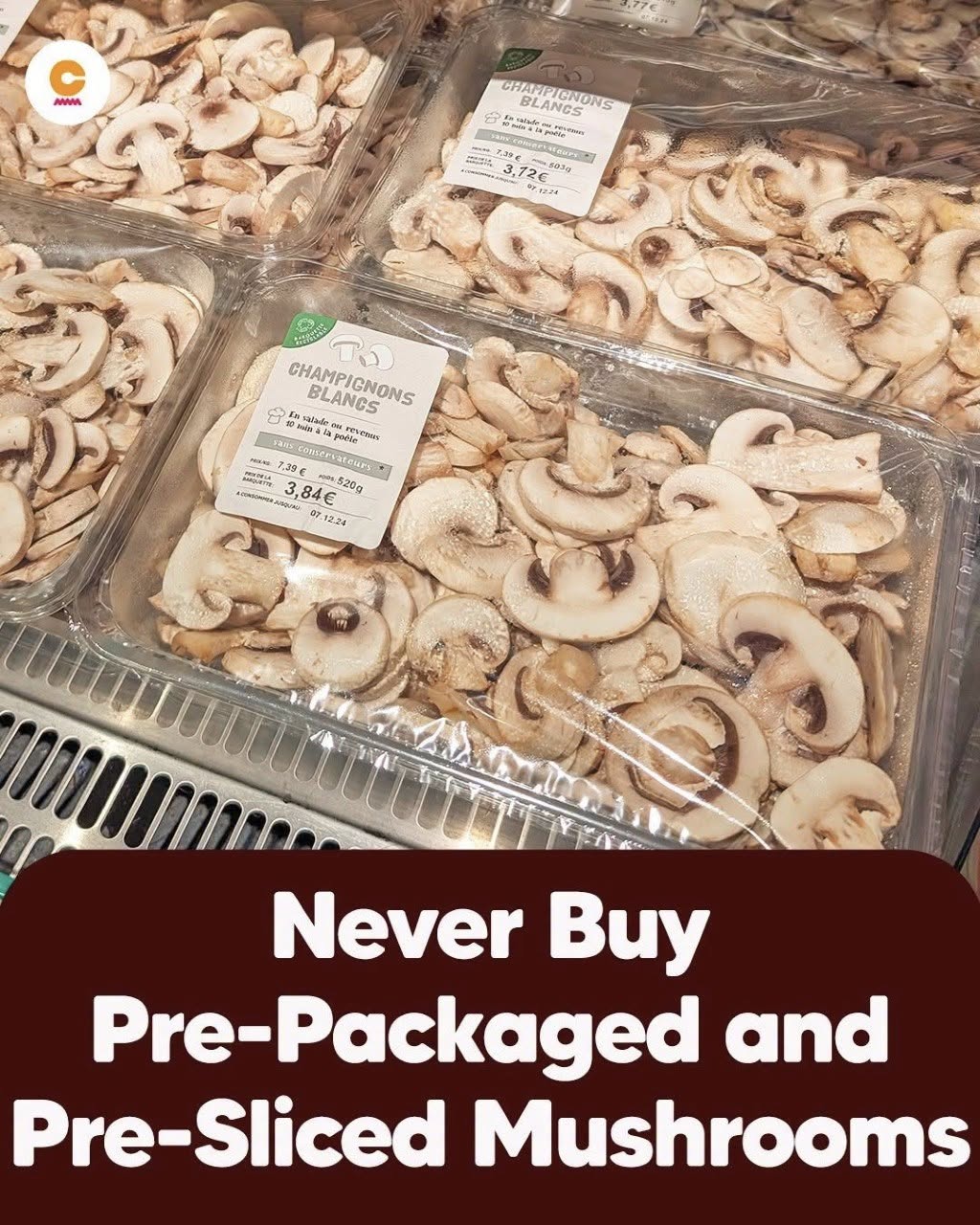
Why Pre-Cut Mushrooms Lose Their Goodness
Mushrooms are a nutritional powerhouse, packed with vitamins, minerals, and antioxidants. However, once sliced and exposed to air, they begin losing some of their essential nutrients—particularly vitamin C and certain B vitamins. Oxygen exposure breaks down these compounds faster, meaning that by the time you cook those pre-sliced mushrooms, they’re not offering nearly as much nutritional value as their whole counterparts. If you’re eating mushrooms for their health benefits, buying them whole ensures you get the most out of them.
Pre-Packaged Mushrooms Are a Bacterial Wonderland
The combination of moisture, plastic packaging, and pre-cut surfaces makes pre-sliced mushrooms a playground for bacteria. Mushrooms naturally contain a lot of water, and when they sit in a sealed container, that moisture builds up, creating the perfect environment for bacteria and mold. Even if they look fine at first glance, they could be carrying higher bacterial loads than fresh, whole mushrooms. When you buy whole mushrooms and wash them just before use, you minimize your exposure to any unwanted microbial guests.
Flavor Fades Faster Than You Think
Mushrooms have a delicate, earthy flavor that deteriorates rapidly once sliced. The exposure to air causes them to dry out, leading to a less intense, almost rubbery texture when cooked. Whole mushrooms, when stored properly, retain their firm, meaty bite and deep umami notes much longer. If you want the best flavor, slicing them fresh right before cooking makes all the difference in taste and texture.
Plastic Packaging Means More Waste (and Guilt)
If the quality and cost weren’t reason enough to ditch pre-packaged mushrooms, consider the environmental impact. Those plastic-wrapped trays contribute to unnecessary waste, with single-use plastics that often can’t be recycled properly. Whole mushrooms, especially when bought in bulk or from a farmer’s market, generate far less waste. A simple paper bag is all you need to store them properly in the fridge, keeping them fresher for longer while reducing plastic pollution.
