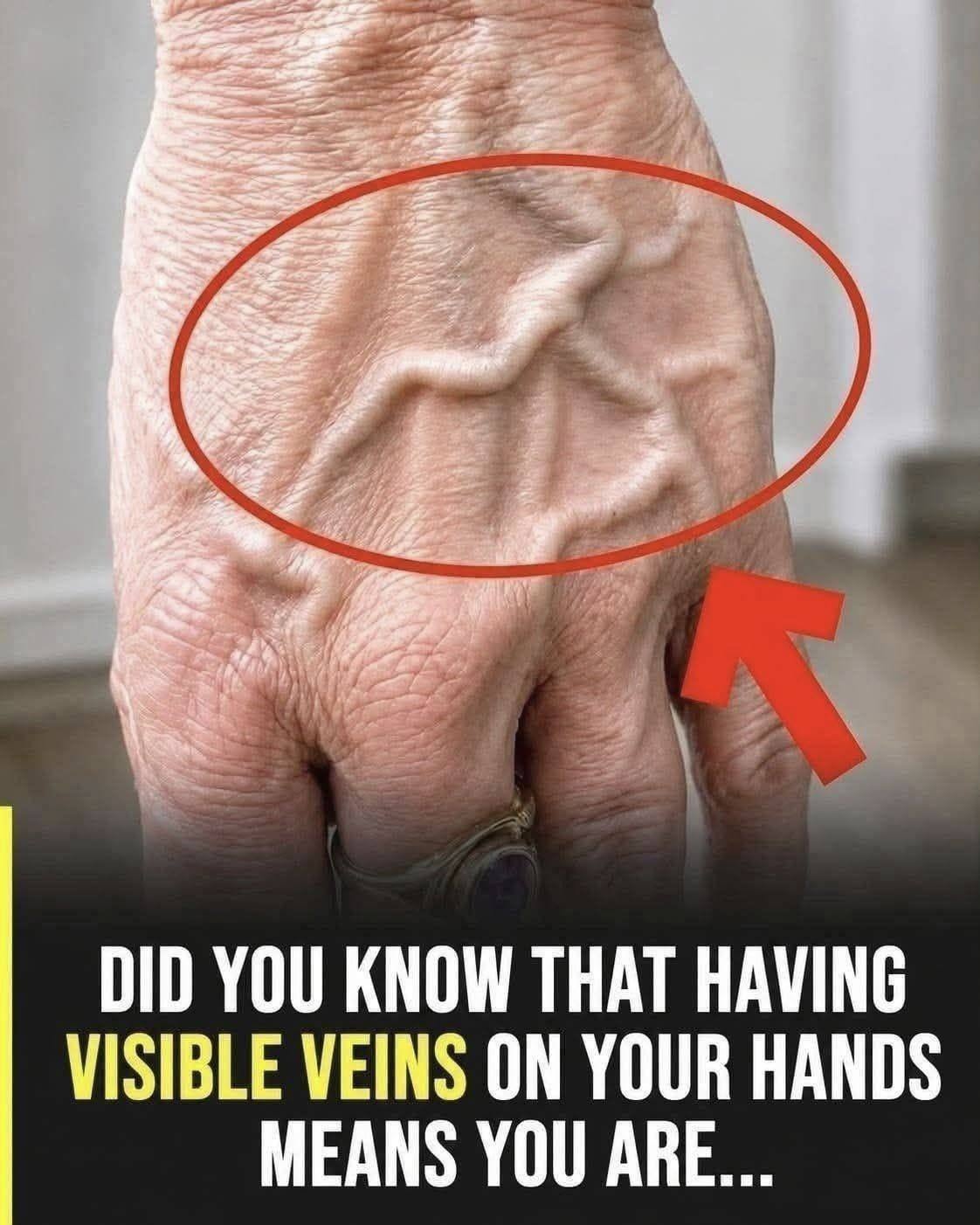
Did you know that having visible veins means you are

-
Thinner, fairer skin naturally allows underlying structures like blood vessels and tendons to show through much more easily. As we age, our skin naturally loses collagen and thins out, making veins more apparent even if body composition hasn’t changed.
Vasodilation and Blood Pressure:
-
When you exercise, work out in the heat, or experience higher blood pressure, your blood vessels dilate (expand) to help cool the body down and push blood closer to the skin’s surface to release heat. This temporary swelling makes veins look larger and more visible.
The Clickbait Myth vs. Reality
-
The “Super Metabolism” Myth: Fitness influencers love to claim that visible vascularity in the arms or hands proves you have an elite metabolism or are in a state of rapid fat burning. In reality, it just means you have low body fat in that specific area, or you recently finished a heavy lifting session.
-
The “Disease / Deficiency” Fear-Mongering: On the flip side, some wellness blogs try to scare people by claiming bulging veins mean your blood is “thick with toxins” or that you are severely deficient in a specific vitamin. Biologically, veins do not bulge as a direct symptom of dietary deficiencies. (Though chronic venous insufficiency can lead to varicose veins in the legs due to faulty valves, that is a structural circulatory issue, not a magical wellness indicator).
The Bottom Line
Headline writers love to use cliffhangers like “having visible veins means you are…” because it triggers instant curiosity about our own bodies. In reality, visible veins are just a normal anatomical map shaped by your genetics, skin thickness, hydration, and body fat levels—not a secret diagnostic test.
Did a social media video cut off right at that exact phrase and leave you hanging, or were you wondering why your veins look more prominent lately?
