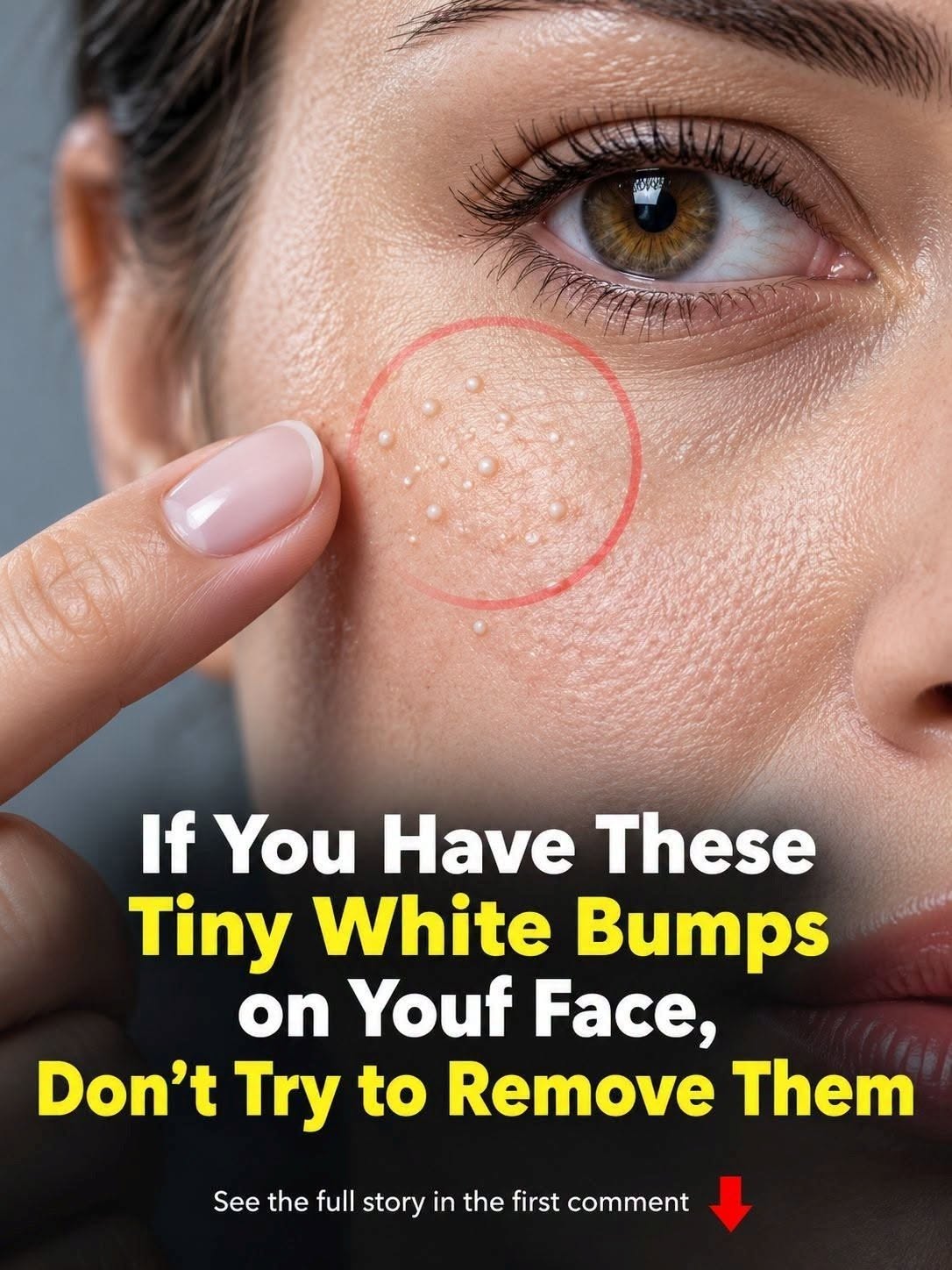
If You Have These Tiny White Bumps on Your Face, Don’t Try to
Have you noticed small, pearly-white bumps around your eyes, nose, or cheeks? They could be milia, a common skin condition that affects people of all ages. Although they may resemble whiteheads, milia are not acne—and squeezing them can damage your skin.
What exactly are milia?
Milia are tiny cysts containing keratin, a protein naturally found in skin. They sit just beneath the skin’s surface and often appear on the eyelids and cheeks. They are harmless, and some disappear
without treatment, while others remain for months or longer.
Why shouldn’t you squeeze them?
Trying to force milia out by squeezing, scraping, or using a needle can injure the surrounding skin. Instead of removing a harmless bump, you could end up with inflammation, an infection, or a permanent scar.
Resist the temptation to keep picking when nothing comes out. If removal is needed, leave it to a healthcare professional.
Why do they develop?
Some milia appear without an obvious trigger. Others form as skin heals after an injury, burn, or
blistering condition. Certain topical medicines can also be associated with their development.
Having milia does not automatically mean something is wrong with your skincare routine. They can occur in children and adults, and they are particularly common in newborns.
How should you care for your skin?
Wash gently with warm water and a mild cleanser, then pat your face dry. Use sunscreen outdoors and avoid picking at the bumps.
For babies, milia usually resolve naturally. Do not apply adult skincare treatments to an infant’s delicate skin. If the bumps persist
or you are unsure what they are, ask a healthcare professional.
When should you see a dermatologist?
If the bumps bother you, persist, or have not been diagnosed, a dermatologist can examine them. Other skin conditions can look similar, so appearance alone is not always enough to identify milia.
Confirmed milia usually need no treatment. When treatment is appropriate, options include professional extraction and, in selected cases, prescribed topical treatments. The choice depends on their location and extent.
Protecting your skin is more valuable than forcing a small bump out.Give it time, and seek professional advice if you want it removed safely.