
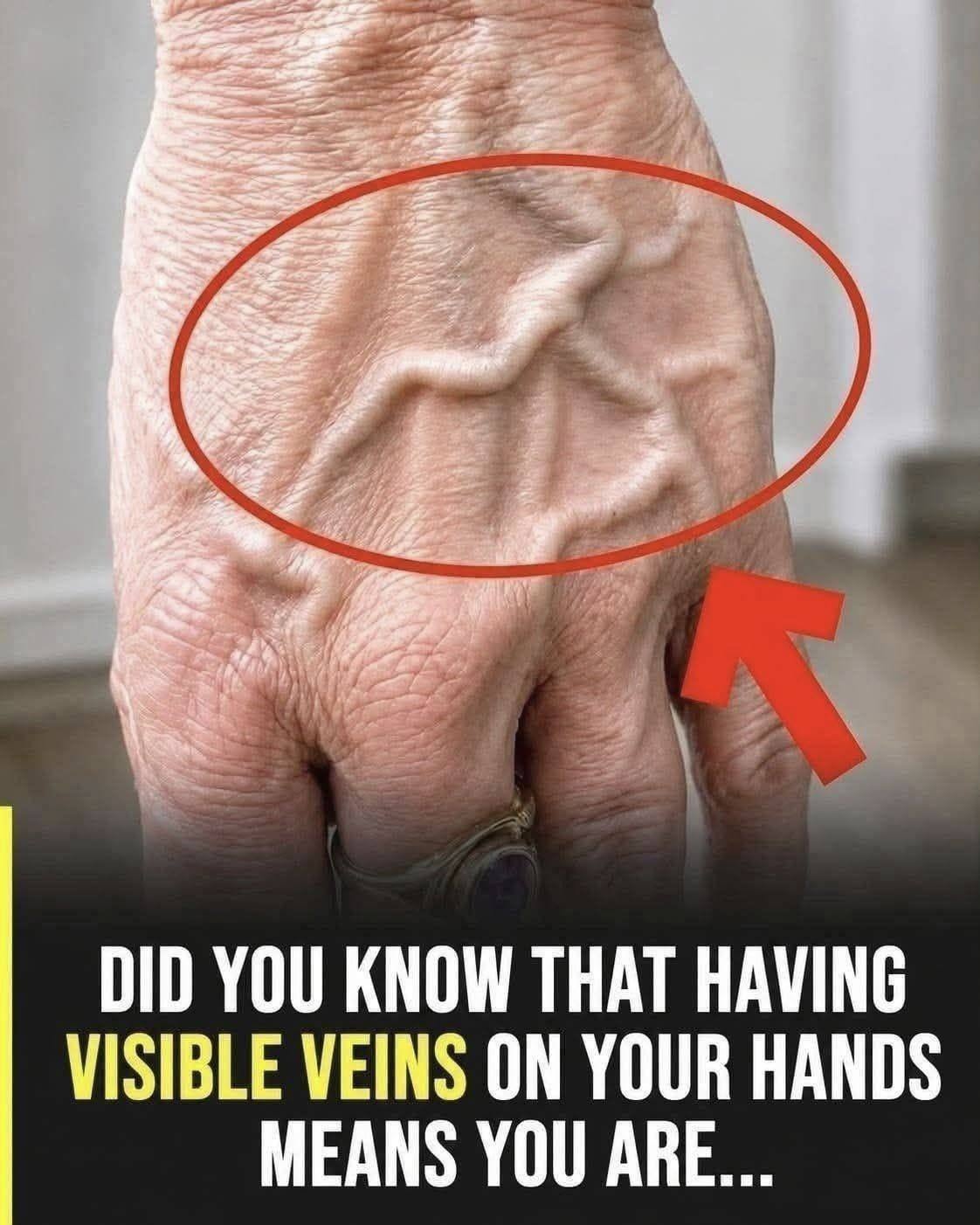
“Did you know that having visible veins means you are…”—and right on cue, we have landed right back on the classic social media health trap!
If you see a headline or a short-form video cut off mid-sentence with that phrase, it is almost always followed by a dramatic, sweeping claim: either that you have a “supercharged metabolism,” that your body is undergoing a miraculous “detox,” or conversely, that you are suffering from a terrifying, hidden nutritional deficiency.
In clinical anatomy and physiology, the reality of visible veins is much more mundane—and much less dramatic—than what the internet wants you to think.
Let’s look past the viral clickbait cliffhanger and examine the actual science behind why some people’s veins pop while others have completely smooth skin.
The Anatomy of Visible Veins: What’s Actually Happening?
Veins are simply the blood-carrying tubes responsible for returning deoxygenated blood back to your heart. Why they show prominently on the skin’s surface usually comes down to three basic biological factors, none of which are secret health indicators:
-
Subcutaneous Fat Thickness (Body Fat Percentage):
-
This is the number one reason veins become visible. Everyone has a network of veins just beneath the skin. If you have a lower overall body fat percentage, there is less insulating fat tissue between your skin and your blood vessels, making them appear closer to the surface and more prominent.
-
-
Skin Thickness and Pigmentation:
